MOVIE REVIEW
Tokyo Sonata (2008)
Regent Releasing
"So·na·ta (n.): a musical composition of three or four movements of contrasting forms." – Dictionary.com.
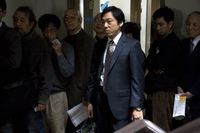
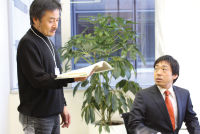
In a curious exercise, Kiyoshi Kurosawa quite literally applies the musical definition of a sonata to his visual study of modern-day life in Tokyo. The subject is family, the unifying theme dysfunction. His characters are the instruments that play out his contradictions in style and form, juxtaposing the director's various genre practices against each other in one cumulative whole. The result: "Tokyo Sonata," a collection of narrative movements that feels as grand – and yet concise – as any musical sonata piece by Beethoven or Mozart.
Continue reading “When Bright Future Eludes, a Family Unites” »
MOVIE REVIEW
Tokyo! (2008)
Liberation Entertainment
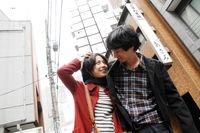
“Tokyo!” presents its viewers with a unique opportunity: the chance to see three filmmakers given full creative license to interpret a theme without restriction. Michel Gondry, Léos Carax and Bong Joon-ho have been brought together to work on three separate projects directly tied to the common motif of the sprawling megalopolis. Master stylists all, the men go about their work with demonstrable exuberance, clearly enthused by the artistic freedom granted them and the chance to work in a city that’s very much at the cultural fore of the 21st century.
Continue reading “Found in Translation” »
Regent Releasing
About 10 years ago, I was home for the summer after my freshman year in college. This was going to be the summer of catching up on all of the movies I had missed during the hectic year. I was perusing the foreign film section searching for my usual cinematic fare, which at the time was contemporary French and Chinese films. Suddenly, I come across an enigmatic cover with half of a man’s face in shadow. It said “ 'Cure,' a film by Kiyoshi Kurosawa,” and the tagline read, “Madness. Terror. Murder.” Intrigued, I read the back of the DVD case. Although I had never seen a Japanese film before and was not very interested in exploring its cinema, but a reviewer blurb compared “Cure” to recent American hit “Seven.” So I rented “Cure.” It was then and continues to be today one of the best films I have ever seen. I immediately watched as many of Mr. Kurosawa’s movies as I could find. Soon my love of his work compelled me to discover the rest of Japanese cinema, which has become my passion and area of study.
Continue reading “Capturing the Dissonance of a Fractured Family” »