MOVIE REVIEW
The White Ribbon (2009)
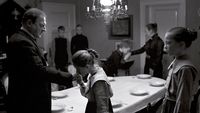
Films du Losange/Sony Pictures Classics
In “The White Ribbon” Michael Haneke does Bergman. That is to say, he approximates the Swedish master’s characteristically austere, rigidly formalist style that contains only the most slightly submerged sadistic undertones. The winner of the Palme d’or at the 2009 Cannes Film Festival, it’s an intermittently effective experiment that’s too often derailed by the pervasive sense of overcalculation.
Continue reading “Puritan-Driven Snow Job” »
MOVIE REVIEW
Séraphine (2008)
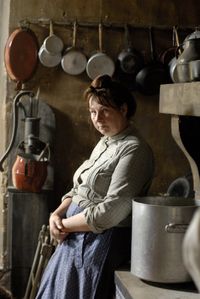
Music Box Films
The act of painting is a visual one and therefore inherently cinematic. Artists are usually interesting individuals with complicated personal lives and dramatic outlooks — or so the stereotypes say. So movies about painters are visually and dramatically interesting. Except, of course, when they are not.
Séraphine Louis (Yolande Moreau) was a bonne à toute faire (a woman worker who could do anything in the home; literally, a jill-of-all-trades) in Senlis, a small town outside Paris, in the 1910s when she started working for Wilhelm Uhde (Ulrich Tukur), a German escaping the city life of Paris. They interacted as a bourgeois bohemian normally interacts with his cleaner, until he realized that she painted. As it happened, he was one of Europe's premier art critics, and so Séraphine's career was born.
Continue reading “Juggling Scrub Brush and Paint Brush” »
MOVIE REVIEW
North Face (2008)
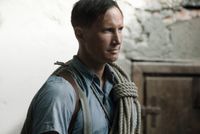
Majestic Filmverleih
"North Face" can pass as a horror film. It takes place over a short mountain climbing expedition, which doesn't much sound like fun. There is something tall you can fall off of. There is no easy way to get up without nearly slipping and falling to your death. There are things like rocks and avalanches which can drop on you. Your ropes can cut your hands, your gloves can get lost so you get frostbite, you rest where you can without hot food or a place to lie down and you can't fall asleep so you don't freeze. Some vacation! So the drama of "North Face" is there just in the premise. But the 1936 setting means the climbers are working in the same type of clothes we all have laying around at home – one of them wears a flatcap, for pity's sake – and there is no high-tech solution to their basic problems.
Continue reading “An Alpine Triumph of the Will” »