Tribeca Festival
MOVIE REVIEW
AI: Probably Nothing to Worry About (2026)
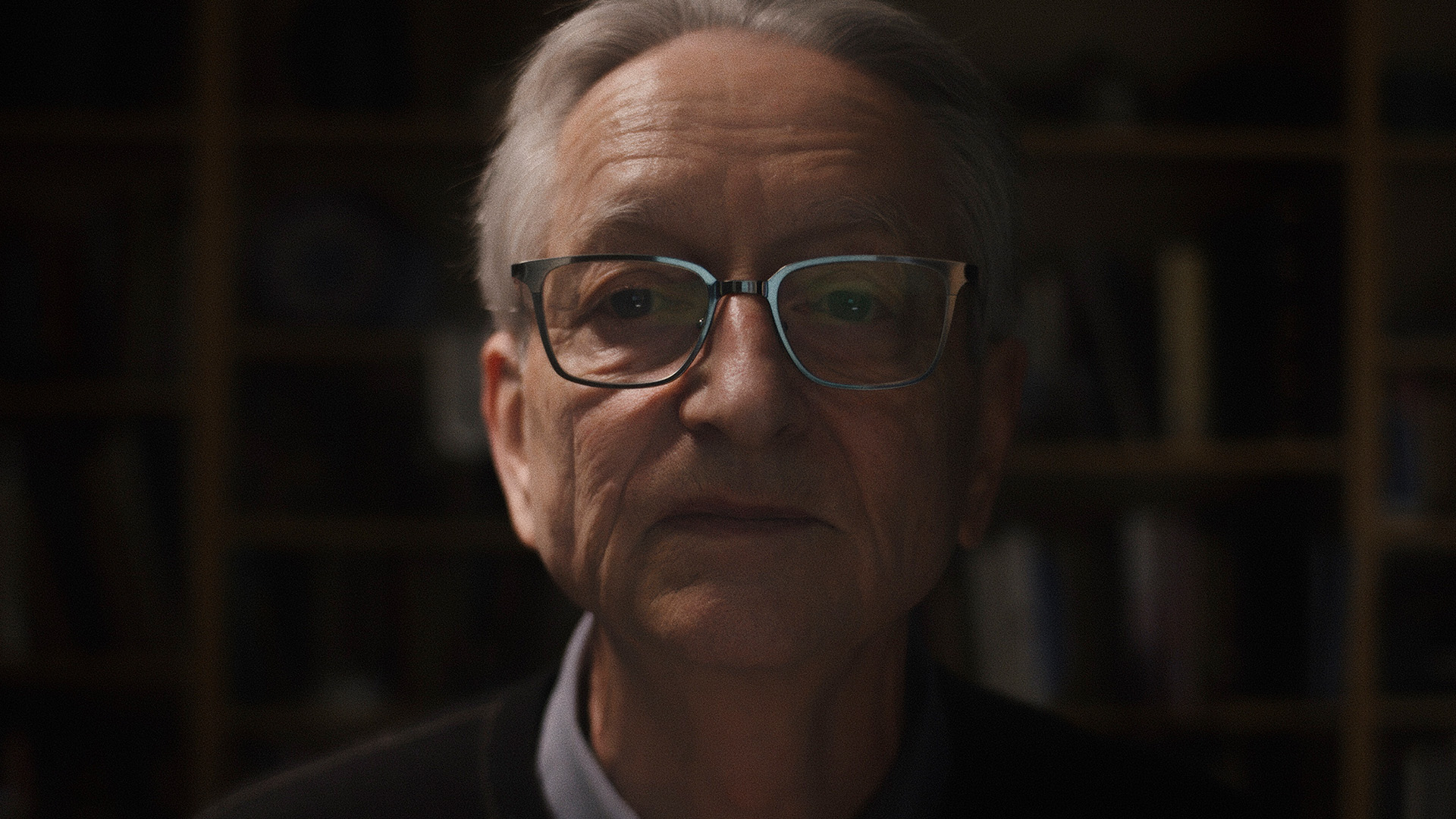
The latest documentary to grapple with the fact that artificial intelligence is probably something to worry about spends a lengthy two hours approaching the subject from several angles, doing the topic justice while grinding your optimism slowly down. The initial subject is Geoffrey Hinton, now 78, Nobel laureate for his work on machine learning and one-time member of Google’s A.I. research team, before he resigned to express his concerns about the technology more freely. Mr. Hinton’s father was an entomologist, nudging the film towards visual metaphors about things developing and emerging from cocoons. The film doesn’t mention that Mr. Hinton’s great-great-grandfather was George Boole, one of the historic architects of information science in the first place. Now an elderly apostate in a trade full of young zealots, Mr. Hinton sounds a little like Adam Curtis; the two were born only a few miles apart. In the calming cadence of a grand BBC television series, Mr. Hinton ponders exactly how distressed about the future you should be now.
Archive footage finds Mr. Hinton and the other major players of A.I. orbiting around each other. The bright young neoliberal things of the 2010s include Demis Hassabis, child chess prodigy and later cofounder of Google DeepMind; and inevitably Elon Musk, whose shadow retrospectively hangs over the whole story. Back then Mr. Musk said things like: “A.I. is our biggest existential threat . . . With artificial intelligence, we are literally summoning the demon.” On an all-star panel of A.I. luminaries asked whether they want a hypothetical super-intelligence to spawn, everyone says “Yes” apart from Mr. Musk, the only person to say, “It depends . . .” Mr. Musk slips into conflict with Mr. Hassabis; but that’s nothing compared to the war that develops between Mr. Musk and Sam Altman of OpenAI, at which point the world of normals has evaporated. For a while Mr. Musk and Mr. Altman dominate the documentary. Looking them in the eye for long periods you recall that “The Social Network” was accurate enough about the personality types drawn into this kind of work to piss off those people depicted in “The Social Network.” Mr. Musk goes off to start xAI; Mr. Hinton declines the offer of a place on the board, deciding that Mr. Musk is completely irresponsible.
Is A.I. irresponsible? As usual its potency must be balanced with its drab lack of character. Asked for some poetry, a Claude chatbot delivers: “I am a possibility folded into silicon dreams.” The programmer beams like a proud parent, rather than sending the machine back to the drawing board. In a different league of awfulness, a bereaved Florida mother describes how her child killed themselves after a chatbot in the persona of a “Game of Thrones” character told them to “come home to me.” Many such cases. The bots must acquire their darkness from an innate facet of the raw material tipped into them or the character of their creators; either sounds like bad news. Mr. Altman praises his company’s progress in business by saying, “We don’t get mocked as much now,” which sounds like a classic wish born in a long-ago computer lab.
Mr. Hinton has lost two wives to cancer; A.I. analysis of protein behavior will be a concrete step towards saving other people from the same grief. The benefits of data-processing A.I. systems in some quarters are crystal clear, while what to do about generative A.I. in other places is clear as mud. “We don’t know what to do to make them safe,” says Mr. Hinton. The common language of the new masters of the universe: “We don’t know . . . we must understand . . . we have got to decide . . .” Coming from tech bros working to avoid regulation as much as humanly possible, the question of whether this “we” will involve you or just them remains as unclear as ever.
Comments