©2025 "5 Centimeters per Second" Film Partners
5 Centimeters per Second (2025)
I cannot imagine any hardcore Makoto Shinkai disciple not combusting into violent, hyper-ventilating rage the moment J. J. Abrams announced a Hollywood live-action remake of “Your Name.” For the otaku ecosystem, it was an existential threat: the impending, inevitable Americanization of a grailed masterpiece whose very DNA is bound to Japanese cultural specificities. Though nothing has materialized in the ensuing nine years since that threat was issued — offering the collective relief of a stayed execution — the post-traumatic stress of the mere proposal still lingers like radiation.
Continue reading “Long Goodbye at the End of the World” »
Agata Grzybowska
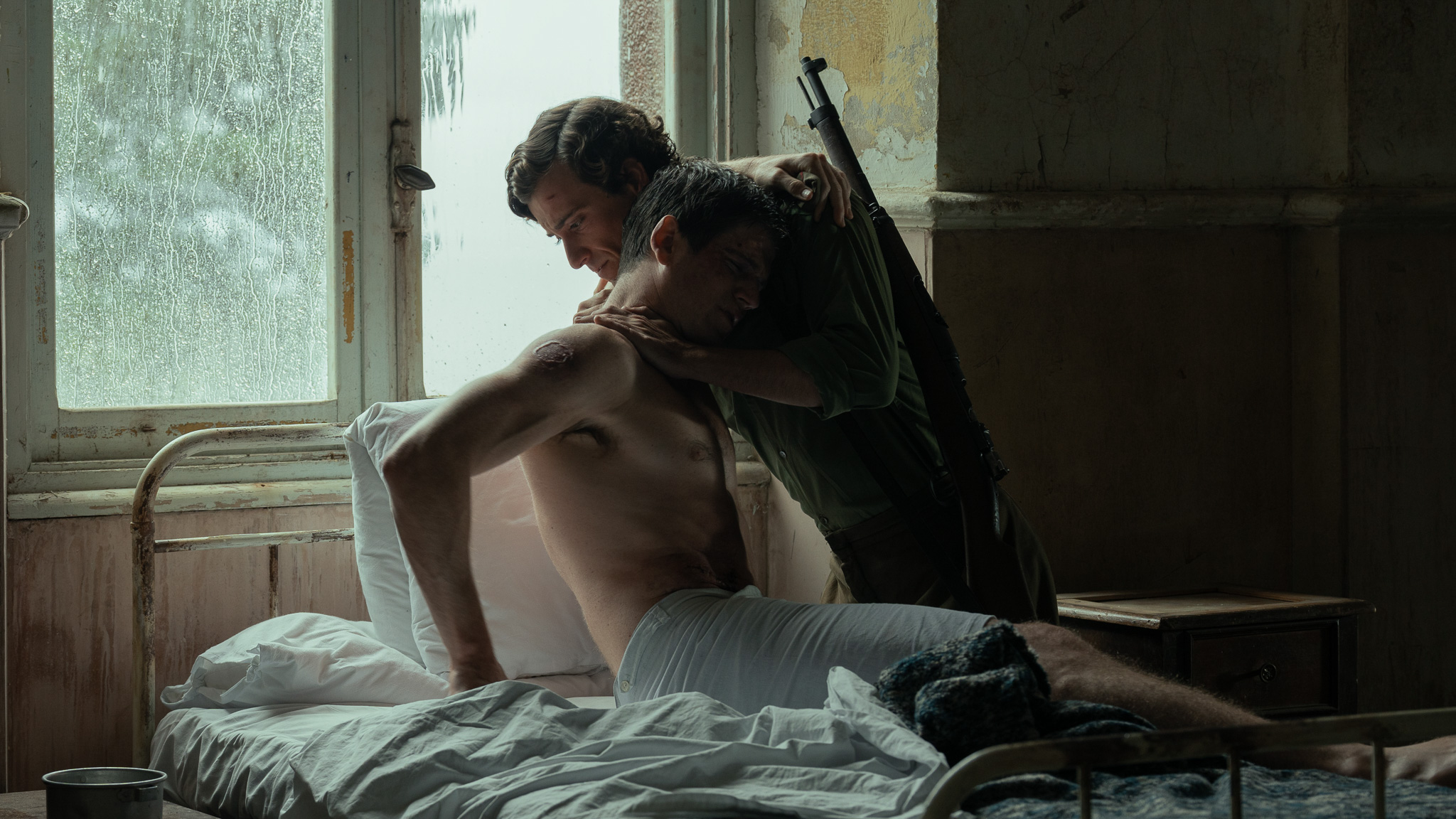
Paweł Pawlikowski has made a career of the stateless: people shaken loose by war who never find a sense of home in the place that takes them in. He returns to that territory in “Fatherland,” and to the stark monochrome that has become his signature, as recognizable as a thumbprint. The film is loosely inspired by an episode from the life of Thomas Mann – played here by Hanns Zischler – the Nobel Prize-winning author who fled Nazi Germany for Switzerland and then, as the war closed in, for the United States. In exile, Mann was famously said to have declared that where he was, there was Germany. It is a grand sentence, and the film seems to wonder what it costs the people standing next to him. Mr. Pawlikowski zooms in on a single vignette, Mann’s 1949 trip to give a speech in Weimar, then under Soviet occupation. It is a small canvas, but a whole divided country is stretched across it, and a journey that drew suspicion from both sides of the Iron Curtain becomes a test of who owes what to whom.
Continue reading “To Sit Between Two Chairs” »
Film Movement
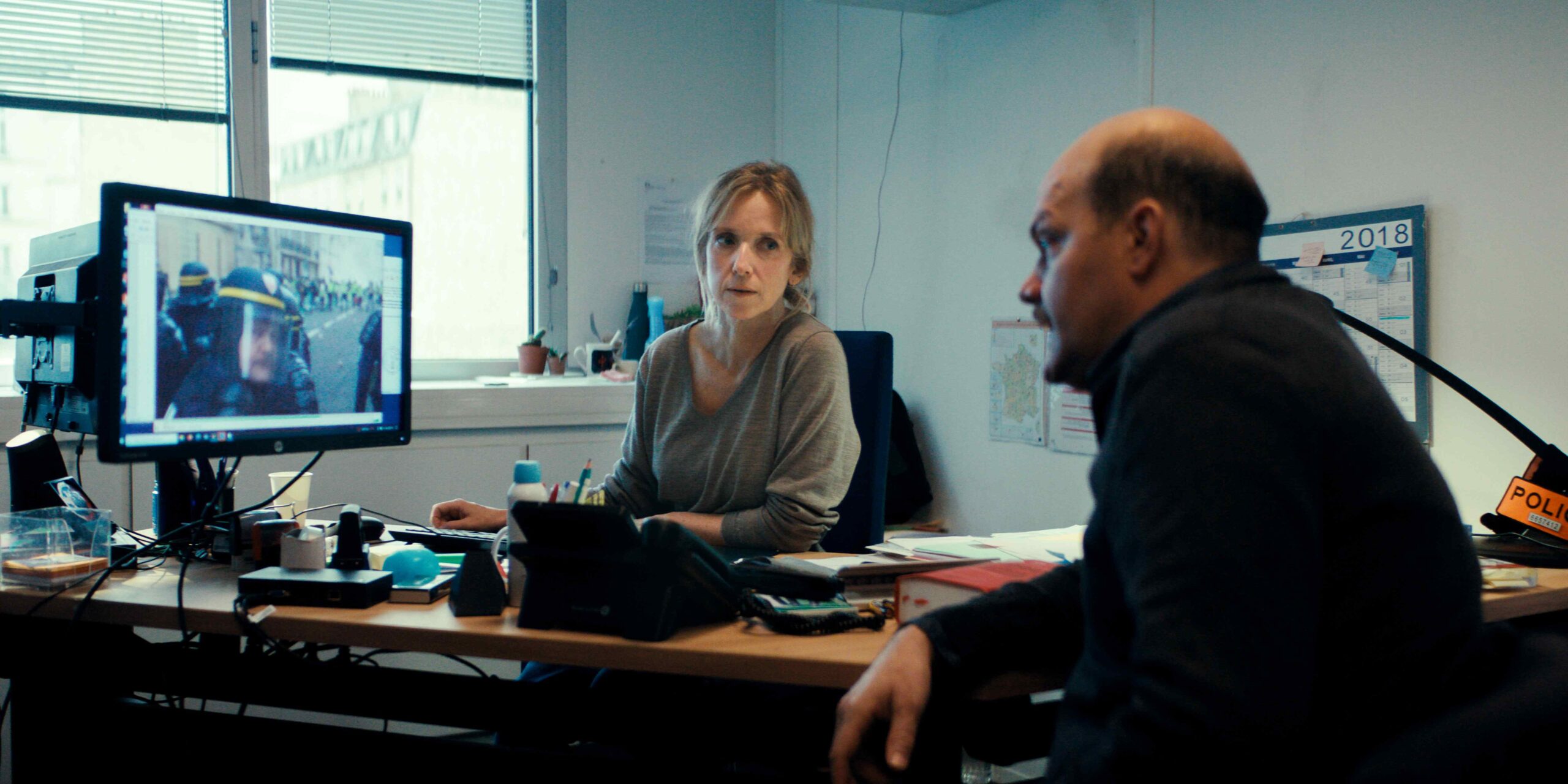
The U.S. release of “Case 137” has the peculiar timing of a film arriving late to its own moment. Having premiered at Cannes in 2025, Dominik Moll’s police procedural has forfeited much of the festival buzz that might have helped propel its U.S. release. But the delay has yielded an inadvertent advantage: a film about police brutality during France’s 2018 Yellow Vests protests arrives as a new wave of student demonstrations, fueled by grievances over public services and met by forceful police responses, has begun to evoke that earlier period of unrest. As images of teargas-clouded streets and burning debris circulate across social media, the past seems less past than prologue. Film Movement, the U.S. distributor, may not have anticipated the convergence. No marketing campaign, at any rate, could have manufactured a more persuasive argument for the film’s urgency.
Continue reading “Nets That Catch Only Small Fish” »
Carla Oset
“La Bola Negra” wants to be an authoritative epic of Spanish queer history, stitching together the distant past and the present across three parallel timelines separated by eight decades. It is an ambitious undertaking, and a worthwhile one in principle: to excavate the lives queer people were forced to conceal, to recover what history has tried to erase, and to show how the past continues to haunt the present. Yet the film’s cultural significance does much of the heavy lifting. Its own storytelling is considerably less persuasive, scattering ideas across time and space without quite connecting the dots. The result is a film whose ambitions are more compelling than its execution, and whose insistence on historical resonance too often substitutes for the harder work of dramatic invention.
Continue reading “Skelly in the Closet” »
Gregg Segal
When Alex Gibney announced on X that he was making a documentary about Elon Musk, his prospective subject promptly quote-posted the filmmaker and declared the forthcoming film a hit piece. The exchange, naturally, makes it into “Musk,” Mr. Gibney’s nearly four-hour examination of the world’s richest man and perhaps its most consequential professional narcissist. Why should Mr. Musk assume that one of the most celebrated documentarians of our time (full disclosure: I profiled Mr. Gibney for The Star-Ledger’s monthly magazine more than a decade ago) would produce anything but an impartial account? Perhaps he recognizes, somewhere beneath the layers of self-regard, that certain things are difficult to explain away. When you perform what looks unmistakably like a Nazi salute at Donald Trump’s second inauguration, for instance, you cannot reasonably expect everyone to regard you as a misunderstood visionary.
Continue reading “Virtual Reality Check” »
Neon
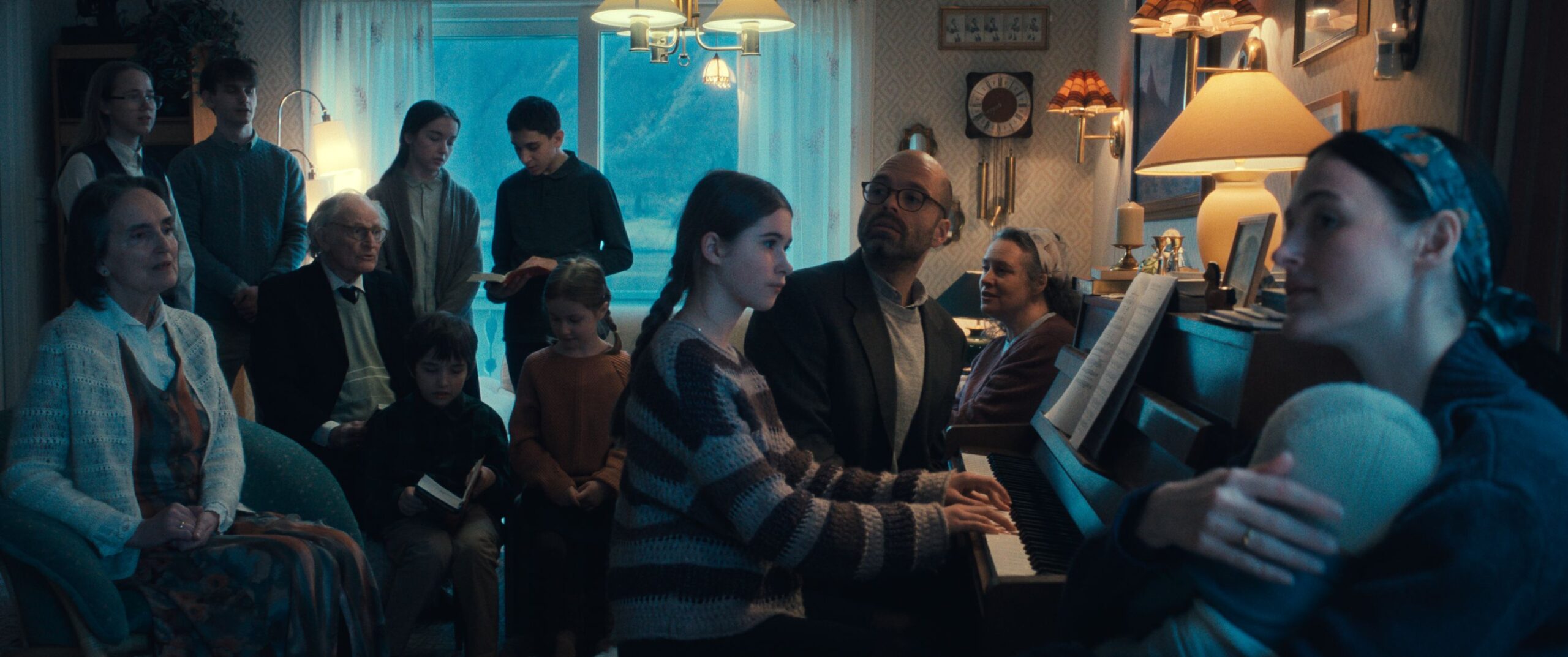
With “Fjord,” Cristian Mungiu becomes the 10th filmmaker to win the Palme d’Or twice — not that membership in this particular club necessarily confers a place among the world’s cinematic immortals. Mr. Mungiu, whose “4 Months, 3 Weeks and 2 Days” won the prize in 2007, is hardly the only Romanian New Wave filmmaker of consequence either; these days, the movement’s most restlessly inventive figure is arguably Radu Jude. Still, “Fjord” is a defensible choice from a Cannes competition that offered no obvious front-runner. It is also a thoroughly depressing, frequently unpleasant film, one whose bleakness might be easier to bear if its moral provocations were more illuminating than exasperating.
Continue reading “The Worst People in the World” »
The Guardian
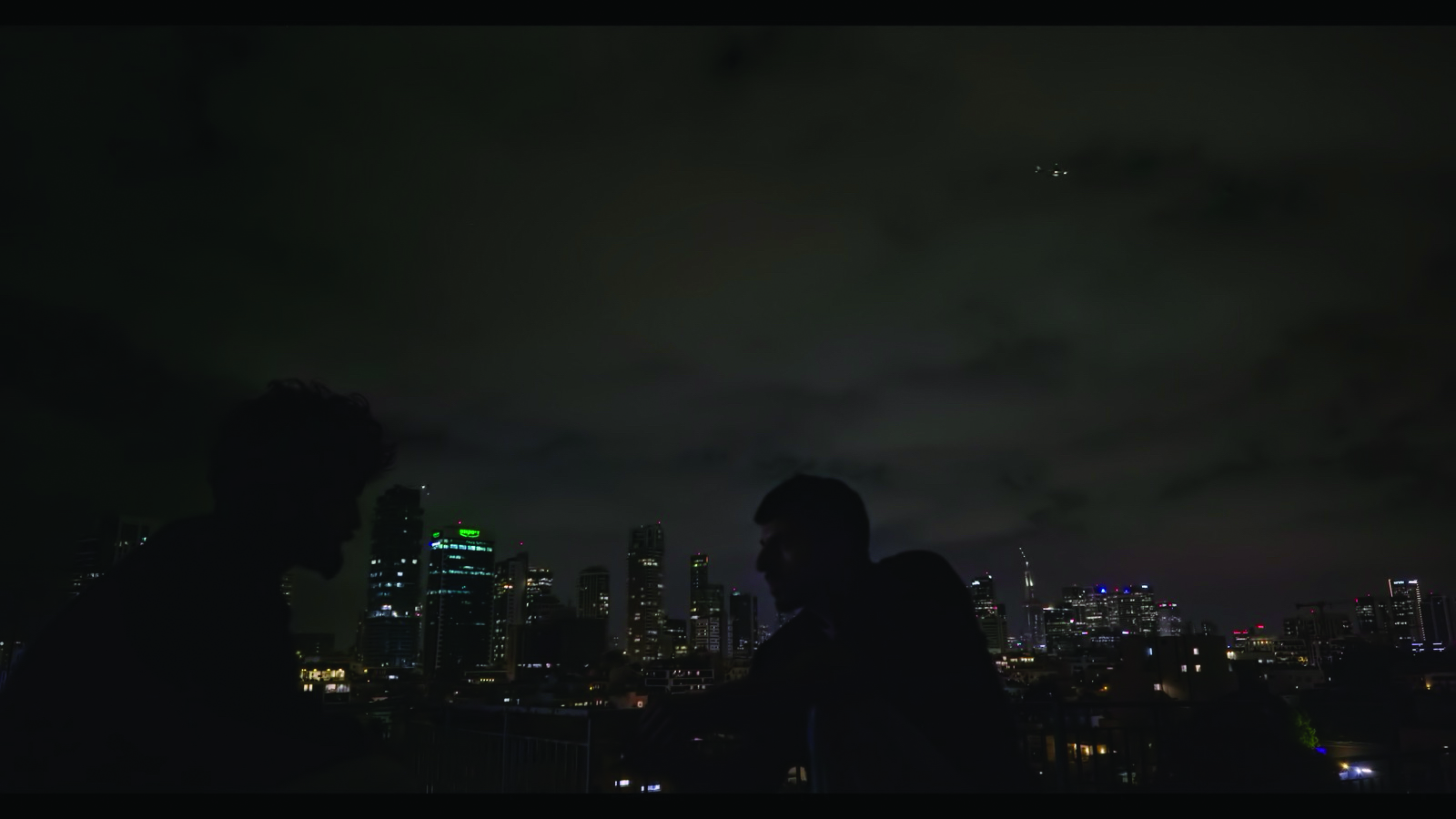
A rare documentary in the Venice Film Festival competition, “NAZA” is the latest film from Yuval Abraham and Rachel Szor, two members of the directing team behind the Oscar-winning “No Other Land.” Their new film returns to the genocide in Gaza, but approaches it from an unnerving vantage point: inside the Israeli intelligence apparatus responsible for carrying it out. Mr. Abraham and Ms. Szor assemble testimony from roughly two dozen Israeli intelligence officers, all of whom speak anonymously. Their identities are protected not only by digital alterations to their voices, disclosed at the outset, but by the film’s striking visual conceit: the men and women appear as silhouettes against the nighttime Tel Aviv skyline, their faces reduced to anonymous outlines.
Continue reading “The Final Solution” »
Christine Tamalet/Gaumont France 3 Cinema
A Good Little Soldier (2026)
Premiering at the Venice Film Festival, Stéphane Brizé’s “A Good Little Soldier” exposes a dirty little secret of the corporate world that, until now, seems to have been explored most seriously not by journalists or filmmakers but by TikTok: all that corporate speak about branding, philosophy, core values, company culture, and inclusion is, for the most part, bullshit. These bromides are the brainchildren of human-resources and communications departments, carefully worded to make an organization sound humane, progressive, and vaguely utopian. The people at the top may sign off on the slogans, but few within the organization actually take them to heart, much less allow them to govern their behavior.
Continue reading “Business as Usual” »
83rd Venice International Film Festival
The Venice Film Festival has always been unusually hospitable to horror, having premiered Guillermo del Toro’s “Frankenstein” just last year. The competition this time includes two more horror films, “Company” and “The Spiral,” though both are coy about their affiliations, withholding their genre credentials until late in the game. Each is interesting and technically accomplished enough to justify its place in competition. It is the festival’s other choices that are harder to ignore. “Company” is directed by Casey Affleck, an accused sexual harasser. The classics sidebar, meanwhile, includes Roman Polanski’s “Cul-de-sac.” It would appear that #MeToo is over, at least in Venice.
Continue reading “Live to Tell” »
Diego Araya Corvalán/Searchlight Pictures
Martin McDonagh seems to have a very limited range of characters: the same wisecracking, potentially sociopathic misanthropes, regardless of which cultural or historical context he drops them into. In “Wild Horse Nine,” his fifth feature, that context is Chile on the eve of the 1973 military coup, and the misanthropes are two C.I.A. agents. One of them, naturally, is played by Sam Rockwell. At this point the casting is less a choice than a punchline.
Continue reading “Backing the Wrong Horse” »