Bryan Gentry/Sundance Institute
When a Witness Recants (2026)
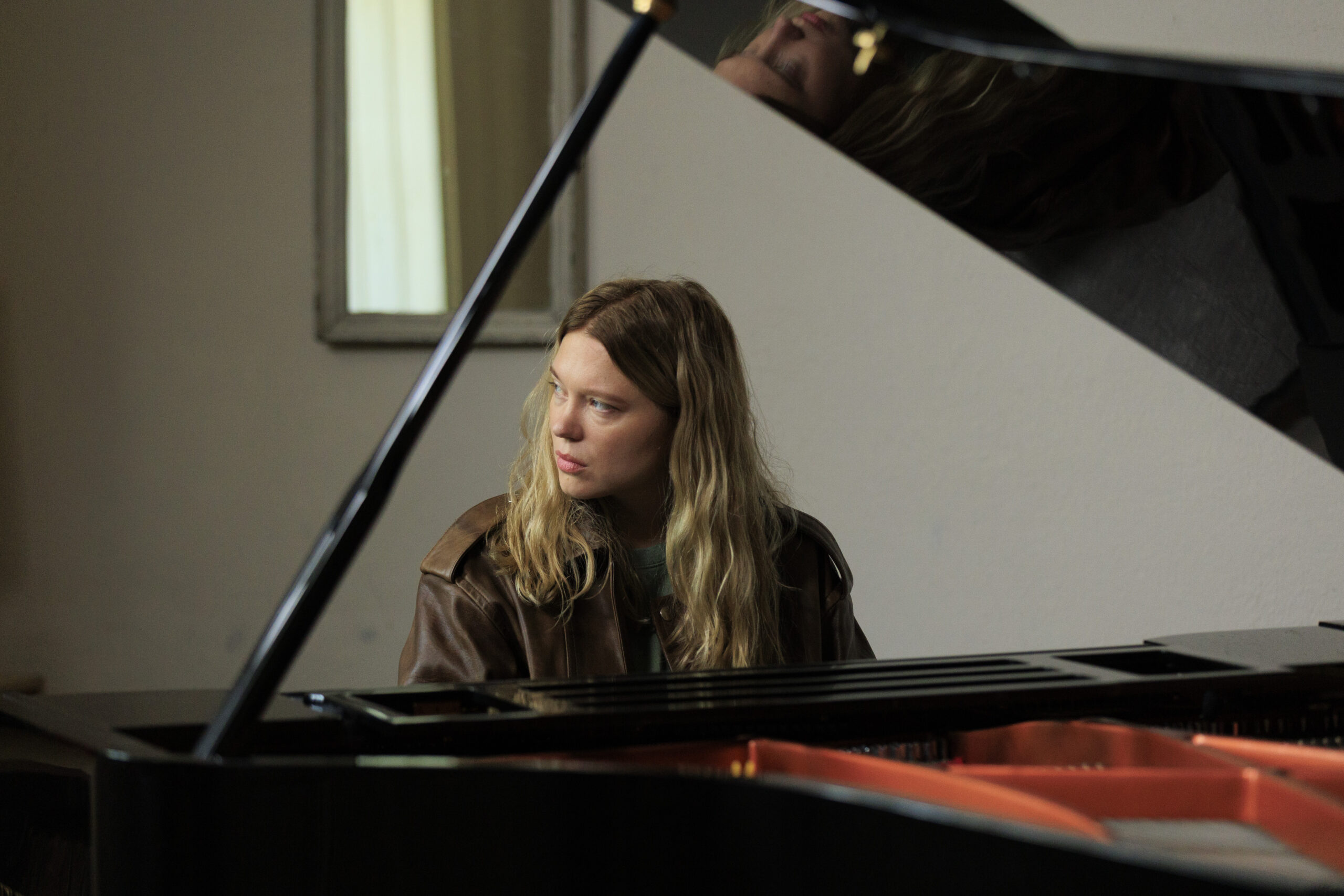
Best Documentary Feature has become the loudest room of this Oscar season, louder even than Best Picture, where no frontrunner has yet emerged. The nonfiction films breaking through are the ones that arrive with a news cycle attached. “Musk” and “NAZA” speak to a midterm election where the stakes for democracy have rarely felt higher. “You Can See Everything” studies a fallen mogul’s manipulations and, perhaps, her malignant narcissism, in a portrait of the ruling class unraveling. One can quibble with the Michael Moore-Morgan Spurlock habit of inserting the filmmaker into the frame in “You Can See Everything,” or with the use of A.I. in “Musk.” One cannot deny that these films are setting the terms of conversation in politics and pop culture.
Continue reading “The Witness Who Made It About Himself” »
Frédéric Batier/Film A-G/Komplizen Film
It has been nearly three years since a federal court ordered the unsealing of the Epstein files, and the country has settled into a posture of exhausted shrugging. Our elected officials have shown little appetite for holding the alleged predators accountable, and the message, repeated until it curdles into wallpaper, is that this is terrible and nothing can be done. That resignation is its own kind of damage. Outrage that never gets answered becomes numbness, and numbness is a luxury only the safe can afford.
Continue reading “Who Looks Away” »
Carla Oset
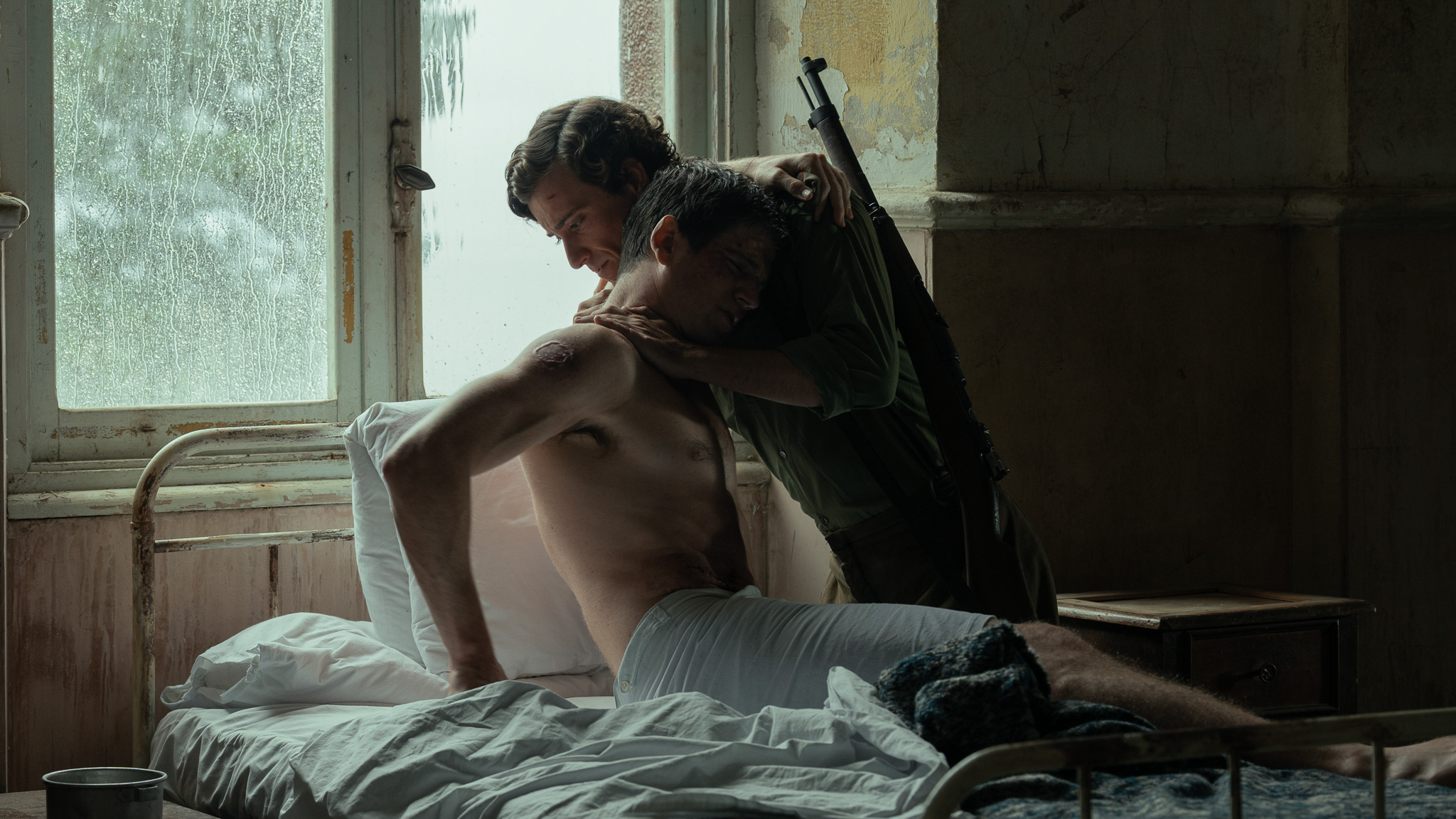
“La Bola Negra” wants to be an authoritative epic of Spanish queer history, stitching together the distant past and the present across three parallel timelines separated by eight decades. It is an ambitious undertaking, and a worthwhile one in principle: to excavate the lives queer people were forced to conceal, to recover what history has tried to erase, and to show how the past continues to haunt the present. Yet the film’s cultural significance does much of the heavy lifting. Its own storytelling is considerably less persuasive, scattering ideas across time and space without quite connecting the dots. The result is a film whose ambitions are more compelling than its execution, and whose insistence on historical resonance too often substitutes for the harder work of dramatic invention.
Continue reading “Skelly in the Closet” »
Anthony Dickenson/Studiocanal
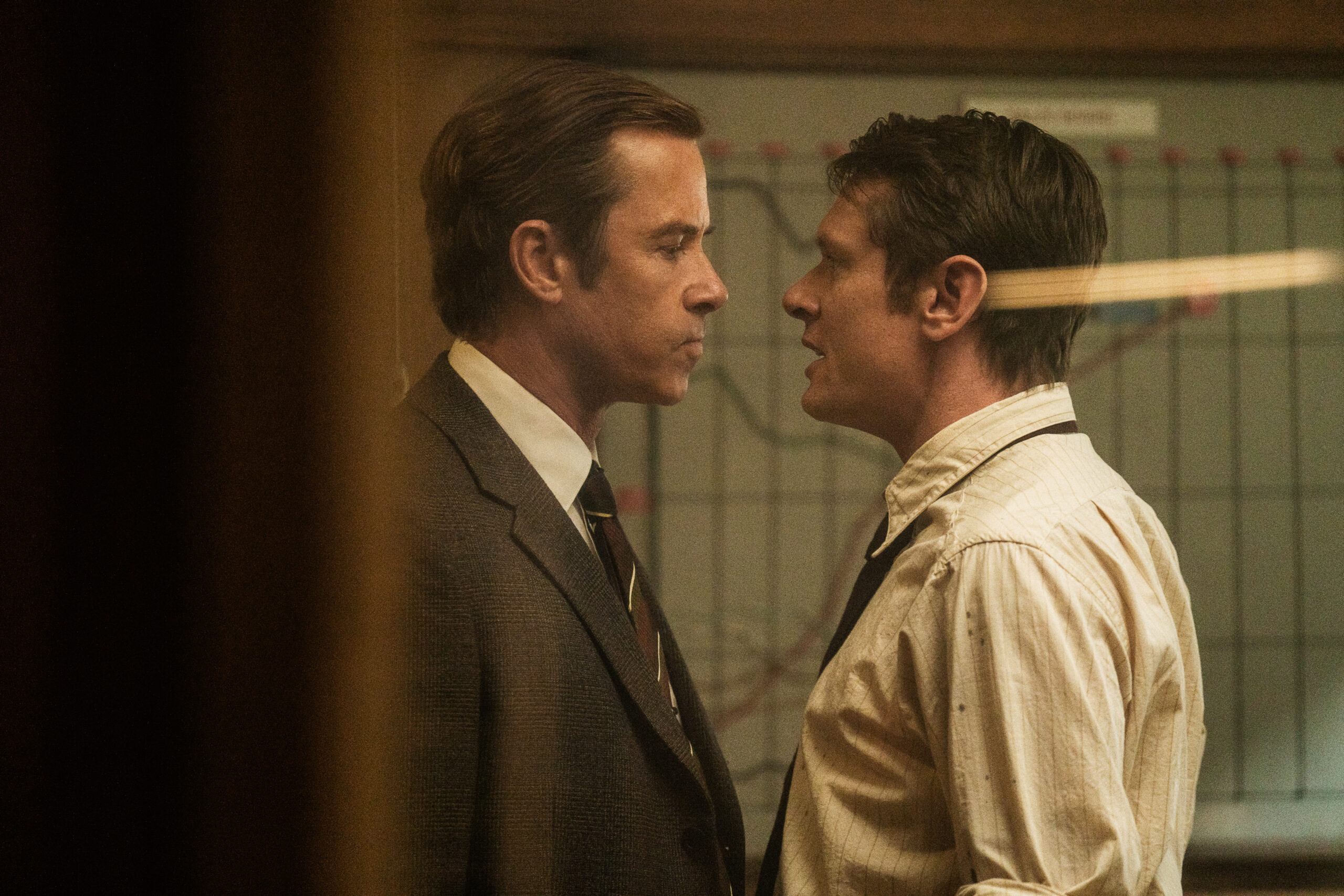
Danny Boyle’s “Ink,” opening at the 83rd Venice Film Festival, offers what may be the most incisive screen portrait yet of Rupert Murdoch — not necessarily because it reveals anything new about the man, but because it understands the peculiar mixture of grievance, ambition, opportunism, and showmanship that has sustained his media empire. The predominantly European-backed production occasionally feels like Hollywood keeping its distance from a mogul whose influence remains difficult to ignore. Yet Mr. Murdoch, played by Guy Pearce in a stroke of inspired casting that reportedly has the mogul’s own approval, is not even the film’s most frightening figure. That distinction belongs to Jack O’Connell’s Larry Lamb, the northern editor of the Daily Mail in Manchester, whom Mr. Murdoch tapped to run the newly acquired Sun in October 1969. Mr. Murdoch may have provided the money and the vision; Lamb supplied the appetite.
Continue reading “If It Bleeds, It Leads” »
Brett Roedel/Disney
A group of 35-year-olds are pulled back into high school in “Never Change!,” through petty bureaucracy rather than magical body-swap or cinematic fable. It seems the graduating class of 2008 at North Meadows High School never technically graduated. Now they must spend two weeks back in the classroom to complete coursework and receive diplomas, under onerous legislation called the Education New Deal. Their original school days were curtailed by a destructive tornado, i.e. by a rare natural event rather than one of the frequent unnatural events that interrupt the education of U.S. high school students in the real world, or end their lives altogether. Marty Schousboe’s comedy, screening at Tribeca Festival en route to streaming on Hulu, makes one direct mention of this parallel, of the risk for any student that coming to school might mean they don’t make it to 35 at all: a teacher notes that compared to 2008, modern high-school can be “a bit funky.”
Continue reading “High School Consequential” »
Alex Majoli
In the Hand of Dante (2025)
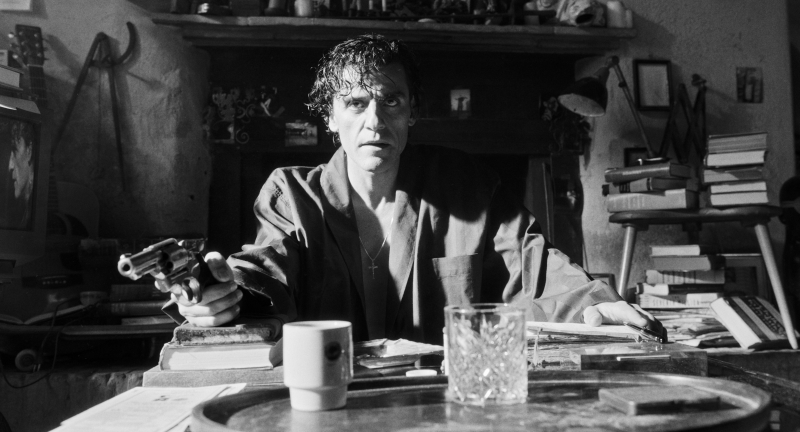
“In the Hand of Dante” emerges as the most controversial selection at Venice International Film Festival. In and of itself, it is not the least bit offensive, but thousands of Palestine supporters took to the streets on Aug. 30 in Lido, the island where all festivities are based. It’s no surprise that 1,500 industry types petitioned to ban the film’s Israeli star, Gal Gadot. Though she has ultimately skipped the world premiere, “In the Hand of Dante” is still catching heat in the press due to director-cowriter Julian Schnabel’s defense of his star.
Continue reading “Literary Gem” »

Netflix
A House of Dynamite (2025)
Kathryn Bigelow’s latest, Venice International Film Festival competition entry “A House of Dynamite,” is, for the most part, one of those end-of-days Armageddon movies, except it never actually culminates in special effects-laden spectacles of total obliteration. The film does not follow the Michael Bay or Roland Emmerich blockbuster tradition. Instead, it focuses solely on those behind the scenes trying to respond and stave off the impending destruction.
Continue reading “Nuclear Options” »

Netflix
Mary Shelley’s 1818 novel, “Frankenstein; or, The Modern Prometheus,” has inspired nearly 20 films, among them a few sequels and even a parody from Mel Brooks. Interestingly, the vast majority of them are modernized reimaginings. Up to this point, the most serious attempt at a straight adaption has been Kenneth Branagh’s 1994 “Mary Shelley’s Frankenstein,” a misguided disappointment on all accounts thanks to the director’s runaway ego.
Continue reading “Death Wish” »

Netflix
Noah Baumbach’s “Jay Kelly,” premiering at the Venice International Film Festival, must be inspired, at least in part, by Federico Fellini’s “8 1/2.” If so, it’s appropriate that it stars the Marcello Mastroianni of our time, George Clooney, in the titular role. Though the protagonist here isn’t a filmmaker but a movie star.
Continue reading “Misleading Man” »

Andrea Pirrello
Paolo Sorrentino’s latest and this year’s Venice International Film Festival opener, “La grazia,” is the antithesis of “Il divo” and “Loro,” his previous features centering on political leaders, despite it also starring his go-to leading man, Toni Servillo, who played Giulio Andreotti and Silvio Berlusconi, respectively, in the previous films.
Continue reading “Uneasy Lies the Head That Wears a Crown” »