The Criterion Collection
Ancestry has become a modern secular obsession. Centuries of migration, displacement, secrecy, and reinvention have left most people with at least one unresolved lineage question, and an entire cottage industry has emerged to answer it. Television programs like “Finding Your Roots,” now in its 12th season on PBS, have formalized the fantasy that identity can be recovered through archival diligence and DNA swabs. Even for those who are not famous enough for Henry Louis Gates Jr. to investigate personally, commercial testing kits promise access to a past that once required either aristocratic records or sheer luck. Yet the premise behind this cultural fixation — that knowing where you come from will clarify who you are — often collides with a more inconvenient truth. Families do not preserve history so much as curate it, and the deeper one digs, the more likely one is to uncover not only origins but injuries.
Continue reading “We Aren’t Family” »
Carole Bethuel
In the five years since winning the Grand Prix at Cannes for “A Hero,” Asghar Farhadi has spent considerable time in the headlines. Far less publicized than the plagiarism accusations brought against him by his former student Azadeh Masihzadeh was the eventual court ruling clearing him of wrongdoing. Back in Cannes with “Parallel Tales,” the Iranian filmmaker appears eager to confront the controversy head-on — not by denying the porous relationship between art and lived experience, but by dramatizing it.
Continue reading “Artistic License” »
Guy Ferrandis
La Vénus électrique (2026)
Pierre Salvadori’s “La Vénus électrique” may be the most exhilarating Cannes opener in recent memory: a wholly original, exquisitely engineered period romantic comedy whose emotional buoyancy never comes at the expense of formal rigor. Though screening outside competition, the film possesses the assurance and tonal sophistication of a major contender. It recalls the kind of unabashedly romantic popular cinema that contemporary filmmakers rarely attempt anymore, much less pull off with this degree of elegance.
Continue reading “Body Double” »
Focus Features
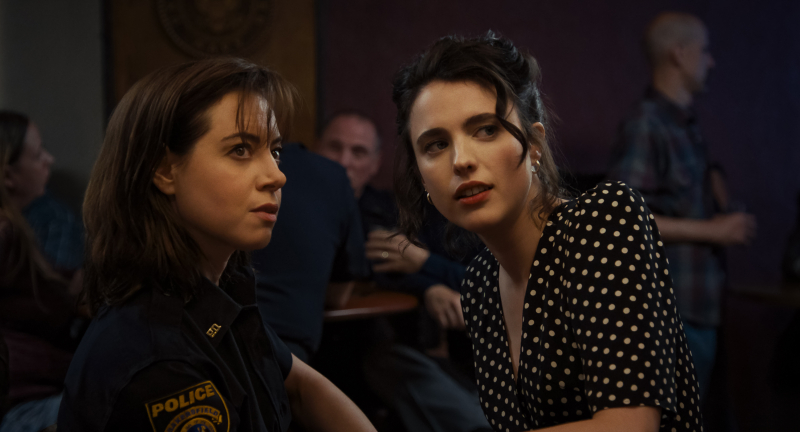
I don’t know what’s with writing and domestic partners Ethan Coen and Tricia Cooke’s weird obsession with lesbians, especially ones that look like Margaret Qualley. Following “Drive-Away Dolls,” they return with “Honey Don’t!,” yet another very blah entry in their supposed sapphic noir trilogy.
Continue reading “O Brother, Where Art Thou?” »

A24
This is Spike Lee’s second stab at remaking an Asian masterpiece. The first, 2013’s “Oldboy,” based on Park Chan-wook’s 2003 Cannes Grand Prix winner, was faithful down to replicating the iconic single-shot corridor fight scene. But it wasn’t well received at all. The result wasn’t as dark or as sickly funny as the original. Perhaps Josh Brolin should have chowed down on a live octopus for good measure.
Continue reading “Success Not Guaranteed” »
Courtesy photo
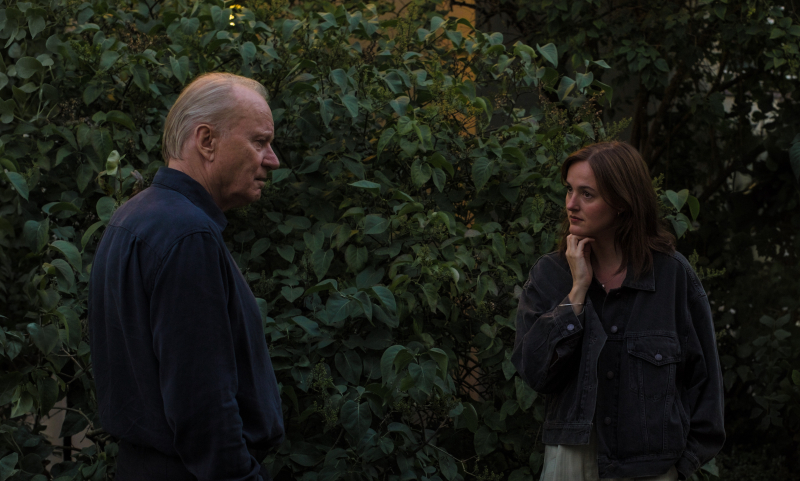
Joachim Trier’s Cannes competition title “Sentimental Value” often feels like an attempt to recapture the success of his Oscar-nominated 2021 film, “The Worst Person in the World.” Not only do we have Renate Reinsve in the lead again, he also frames her with a medium shot right in the center of the screen all the damn time. This is so pronounced that one might actually overlook some of his progression in terms of visual composition.
Continue reading “Daddy Issues” »

Festival de Cannes
It Was Just an Accident (2025)
By the time its Cannes Film Festival world premiere was over, it was clear Jafar Panahi’s “It Was Just an Accident” had emerged as the frontrunner for Palme d’or four days before the closing ceremony. Its reception distinctly set it apart from worthy competition in an overall strong slate. It’s a triumphal return of sorts, his first drama since 2010 when Iran barred him from filmmaking and traveling for two decades. Though Mr. Panahi continued to work in secrecy and have his projects smuggled abroad, following 2006’s “Offside” until now he only made docudramas, injecting himself into the narratives.
Continue reading “No Justice, No Peace” »
Mandarin & Compagnie – Kallouche Cinema – Frakas Productions – France 3 Cinema
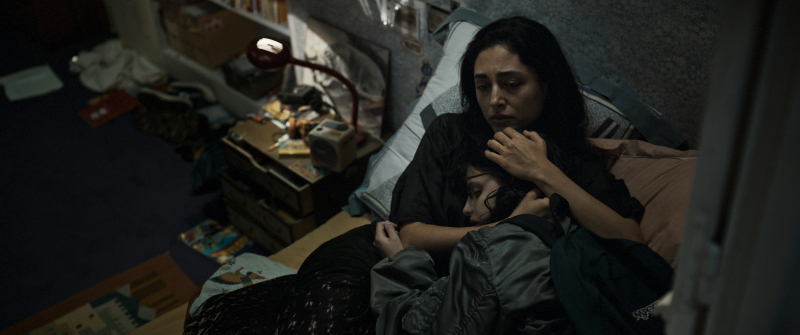
I wasn’t a fan of “Titane,” and much of my aversion could probably be attributed to its undeserved Palme d’or win. To my pleasant surprise, Julia Ducournau’s Cannes Film Festival competition follow-up, “Alpha,” is nothing like it. The film is far more artful and mature, which just goes to show that the New French Extremity filmmaker was merely lauded prematurely. Though elements of body horror seen in “Titane” and “Raw” are still very much present, the new film better qualifies as a ghost story and a coming-of-age tale set in the Twilight Zone.
Continue reading “Ghost of the Past” »

Festival de Cannes
The Phoenician Scheme (2025)
“The Phoenician Scheme” is, for better or worse, an archetypal Wes Anderson movie. The Cannes Film Festival competition entry is, once again, a timeless motion storybook about affluent eccentrics that’s symmetrical, pastel and droll. While Mr. Anderson’s rigorous mise en scène is always to be admired, telling a tale like this in the techbro oligarchy era is a choice – sort of like the cinematic equivalent of let them eat cake.
Continue reading “Beyond the Dreams of Avarice” »
Jean-Louis Fernandez/ARP Sélection
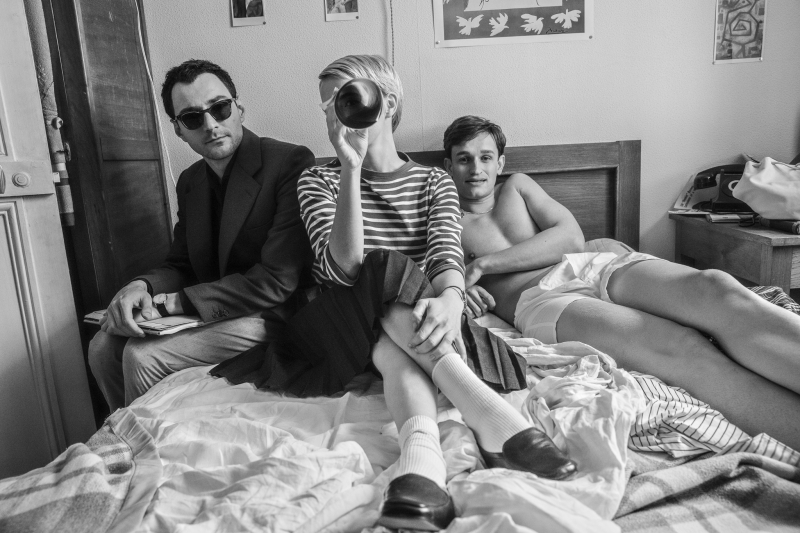
Film critics should be wary of superlatives. I’ve been on both the giving and receiving ends of this advice. Indeed, fashioning reviews after pull quotes in ad slicks is a common rookie mistake. Effusive plaudits should be used sparingly, so once deployed the readers will know you truly mean what you say. Richard Linklater’s “Nouvelle vague” is one such case. But instead of hailing it as the next best somesuch, I’ll say it truly embodies the spirit of this website’s mission at launch in 2008.
See, the OG Critic’s Notebook crew met at the Cinema Studies department at New York University’s Tisch School of the Arts in the mid-aughts. We were intimately familiar with the French New Wave and the legends associated with the movement – the storied Cahiers du Cinéma gang that determined the best way to practice film criticism was through filmmaking. As far as I know, none of our writers or indeed our classmates have gone on to follow in the footsteps of these giants. Filmmaking has never been easier with the advent of the iPhone, yet capitalism has crushed any revolutionary spirit.
“Nouvelle vague” is specifically about the making of 1960’s “Breathless.” After watching everyone else in his ciné-club cohort successfully pivot to filmmaking, Jean-Luc Godard (Guillaume Marbeck) is anxious to leave his own mark. He declines an offer to do literary adaptation and is dead set on making something true to his philosophies and moral positions no matter how miniscule the budget.
Continue reading “Catching the Wave” »