Bryan Gentry/Sundance Institute
MOVIE REVIEW
When a Witness Recants (2026)
Best Documentary Feature has become the loudest room of this Oscar season, louder even than Best Picture, where no frontrunner has yet emerged. The nonfiction films breaking through are the ones that arrive with a news cycle attached. “Musk” and “NAZA” speak to a midterm election where the stakes for democracy have rarely felt higher. “You Can See Everything” studies a fallen mogul’s manipulations and, perhaps, her malignant narcissism, in a portrait of the ruling class unraveling. One can quibble with the Michael Moore-Morgan Spurlock habit of inserting the filmmaker into the frame in “You Can See Everything,” or with the use of A.I. in “Musk.” One cannot deny that these films are setting the terms of conversation in politics and pop culture.
Into this din slips “When a Witness Recants.” In an ordinary year, a documentary with a Sundance pedigree and Ta-Nehisi Coates as both executive producer and talking head would be a presumptive contender. This year it arrives at Cinema Village in New York with little fanfare, a run that does the bare minimum to qualify for awards consideration. It deserves far better than to be a footnote to the discussion.
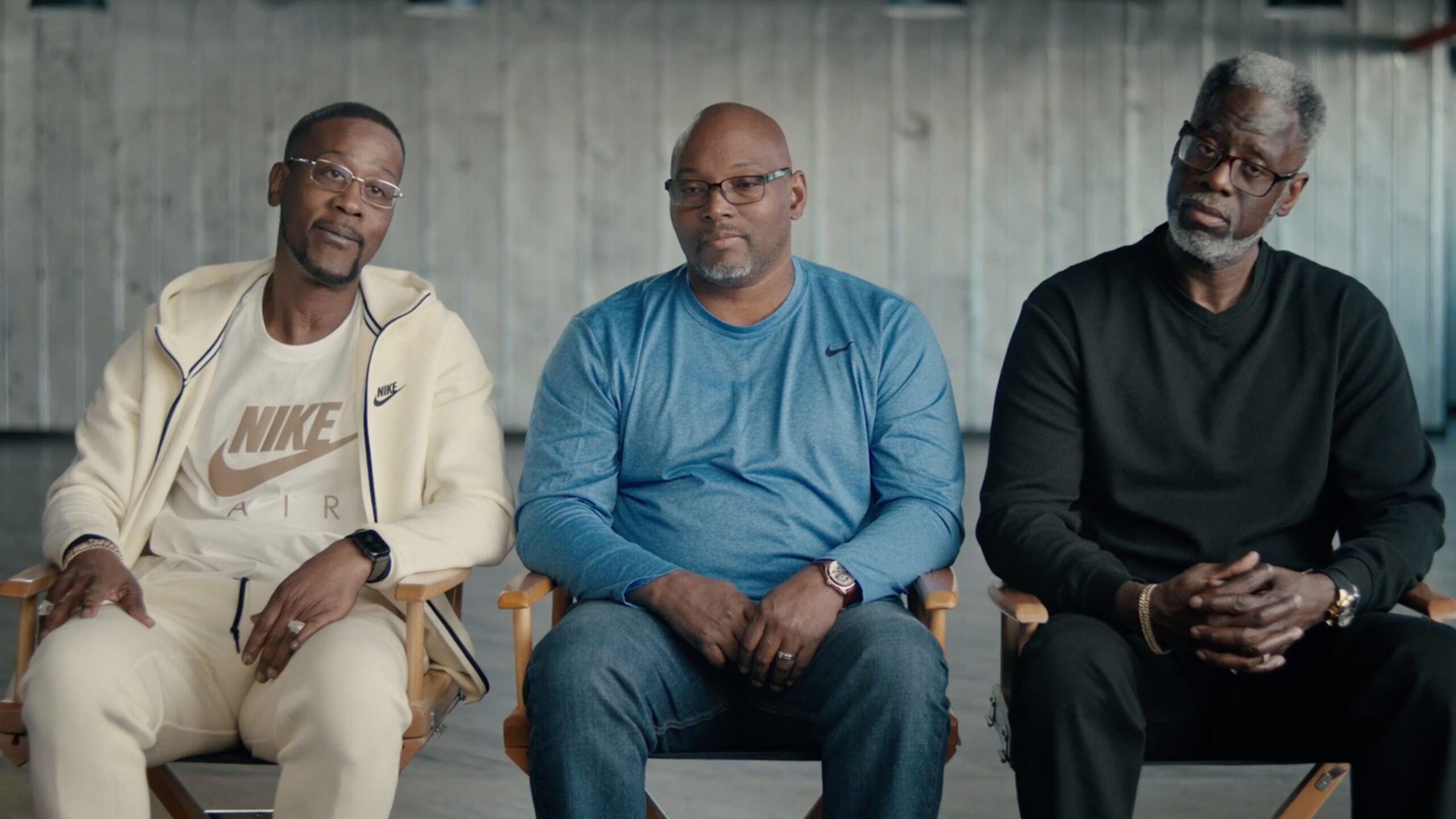
The title is a spoiler, and the film knows it. In 1983, 14-year-old DeWitt Duckett was shot and killed over his Georgetown University jacket in a hallway at Baltimore’s Harlem Park Junior High School. Alfred Chestnut, Andrew Stewart, and Ransom Watkins, all 16 and later known as the Harlem Park Three, were convicted on coerced testimony and sentenced to life. The case left a lasting impression on the young Mr. Coates, a fellow Baltimorean, and you can feel that personal stake in the film.
Voiceover and animation help reconstruct events. Ron Bishop, Duckett’s best friend, was beside him when the shot was fired. He told Det. Donald Kincaid that a lone gunman was responsible. Rather than follow the leads, Det. Kincaid threatened to lock up Mr. Bishop and Edward Capers, who hadn’t witnessed the shooting at all, unless they lent credibility to a story the detective had wedded himself to. Mr. Chestnut’s misfortune was owning a similar Georgetown jacket, which Det. Kincaid fixated on even after the suspect’s mother, Sarah, produced the receipt. Meanwhile the actual shooter, Michael Willis, was seen parading around in his own new Georgetown jacket, and the detective ignored and even suppressed an anonymous tip. The media swallowed the official narrative whole. Judge Robert M. Bell overlooked the inconsistencies in Mr. Bishop’s testimony and handed down life sentences with little hesitation. Then the system compounded its error: for years, parole was denied because the three would not confess to a crime they didn’t commit.
Police abuse of power is a narrative we know by heart, and the film doesn’t pretend to reinvent it. What interests director-producer Dawn Porter is what happens after. She turns her camera on the adult Mr. Bishop, hoping to stage a reconciliation, a reckoning, something close to group therapy between him and the men whose lives he helped steal. That strand takes on a life of its own, and nobody, least of all the filmmakers, could have predicted the fallout.
Under the camera’s gaze, Mr. Bishop displays a startling main-character energy. He explains the unconscionable away as a necessary evil, as though cowardice were a form of circumstance, and never quite grasps that he was Det. Kincaid’s accomplice. Somehow he makes 36 years of injustice, endured by others, a story about himself and his own growth, one that conveniently absolves whatever guilt he may still carry. He smiles. He offers no apology, no accountability, and none of the peace the Harlem Park Three might have hoped to take from the exercise. The camera that was meant to extract a confession instead hands him a stage, and he mistakes the attention for absolution.
The film’s sharpest rebuke comes by contrast. Mr. Capers, serving time on an unrelated conviction, works from behind bars to help restore justice for the Harlem Park Three. Next to him, Mr. Bishop, hardly the hero he imagines himself to be, looks soulless.
“When a Witness Recants” may not be making headlines like the documentaries now hogging the spotlight. It is every bit as essential though, and more deftly assembled to boot.
Comments