MOVIE REVIEW
Leaving (2009)

Laurent Champoussin/IFC Films
Kristin Scott Thomas has never won an Academy Award, and she won’t for her work in “Leaving,” her latest. But let’s be clear: The “English Patient” star is among the finest actors of her generation.
Here, the 50-year-old grabs hold of a sharp — if trashy — screenplay from writer-director Catherine Corsini and lifts it far above standard adultery drama territory. This is not “Fatal Attraction” or “Unfaithful,” movies predicated on guilt, cuckolding and the thrill of misbehavior. Rather, in its star’s able hands, the picture becomes the effective story of a woman opening up and finding the strength to advocate for her desires for the first time.
Continue reading “An Affair to Remercier” »
MOVIE REVIEW
Gerrymandering (2010)

Gary Griffin/2010 Tribeca Film Festival
The world of politics has always consisted of shady backroom schemes and secretive deals behind closed doors. But the process of legislators redrawing district lines to guarantee their future in office, also called "gerrymandering," is one of the more public and generally accepted political machinations. It also might be one of the most insidious, according to "Gerrymandering" — a new documentary by Jeff Reichert — which argues that the American redistricting process represents a profound impediment to genuine democracy and voter empowerment.
Continue reading “To Mark Their Territories, Pols Piss on Democracy” »
MOVIE REVIEW
Made in Dagenham (2010)

Susie Allnutt/Sony Pictures Classics
“Made in Dagenham” seems to be the British “Norma Rae.” Aside from their common thematic and period details, both draw from real-life inspirations and feature star-making turns from lead actresses named Sally. Unfortunately for “Dagenham,” it’s been 31 years since “Norma Rae” and this type of feel-good story about workers united for gender equality seems almost trite. As we know, affirmative action hasn’t entirely closed the gap between the sexes even three decades later.
Continue reading “Reaffirmative Action” »
MOVIE REVIEW
The Social Network (2010)
M. Tsai  David Fincher: “The Social Network” is entertaining only because of Aaron Sorkin’s script, and even then in the most trivial sense. Besides your unmistakable visual vocabulary, you’ve brought little else to the film as a director. It pales in comparison to even your lesser works such as “The Game” and “Panic Room.” In fact, the whole thing is simply too brisk and lacks dramatic weight.
Wednesday at 11:59pm · Comment · Like · See Wall-to-Wall
M. Tsai Aaron Sorkin: There’s no shortage of admirers of your snappy dialogue, but it’s difficult to take anything you write too seriously. It’s fine when the subject is a presidency that no one would mistake for the real thing. But you continue to put Sorkinese in the mouths of your characters in “The Social Network” despite the fact that it’s the true story of the founding of Facebook. Nobody motormouths like that in real life.
Wednesday at 11:55pm · Comment · Like · See Wall-to-Wall
Continue reading “The Writing Is on the Wall” »
MOVIE REVIEW
Aurora (2010)
Coproduction Office
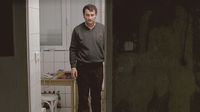
Cristi Puiu famously told the Times that “There is not, not, not, not, not a Romanian new wave.” He certainly made his case with “The Death of Mr. Lazarescu,” a black comedy about Romania’s broken-down health-care system that ultimately became something miraculous. Five years later, though, his follow-up “Aurora” seems to disprove the very same point. The film plays out almost in the same fashion as Corneliu Porumboiu’s “Police, Adjective,” with long stretches of silence and staking out/stalking and then concluding at a police station.
Continue reading “Another Stakeout” »
MOVIE REVIEW
Certified Copy (2010)

Laurent Thurin Nal/Sundance Selects
Abbas Kiarostami has muddled our perception of reality with documentaries (“ABC Africa”), re-enactments (“Close-Up”) and vérité (“Ten”). He ventures further with “Certified Copy,” though this time through the dramatic form. For the first time, he’s working outside of his native Iran. The Tuscan town of Lucignano — with its cobblestone streets, rolling hills, sparkling fountains, old-world museums and cozy cafés — seems to be the perfect place for a love story. It’s certainly more conventional a movie setting than the dirt roads of Tehran. Casting an international star such as Juliette Binoche is also a first for the director. She appears opposite the dashing William Shimell, who looks, sounds and acts the part of a romantic lead — so much so that you’d never guess this is the first acting gig for the opera singer. Is a film less of a virtuoso work of fiction when nonprofessionals act in it? Perhaps Mr. Kiarostami wants us to ponder that for a moment.
Continue reading “That Obscure Subject of Desire” »
MOVIE REVIEW
Film socialisme (2010)

Film Society of Lincoln Center
Jean-Luc Godard is finally showing signs of age after spending much of his career upholding his reputation as the enfant terrible of the nouvelle vague. With “Film socialisme,” he has succumbed to the cranky impulses of a septuagenarian, pretty much railing against everything wrong with the world today while sporadically lamenting a missed opportunity for us to do without capitalism.
Continue reading “Keep Your Left Up” »
MOVIE REVIEW
Uncle Boonmee Who Can Recall His Past Lives (2010)

Strand Releasing
Let’s recap Thai cinematic exports that have recently arrived on these shores. Given their popularity at home and abroad, Tony Jaa’s muay Thai flicks are perhaps the most representative of the indigenous Thai cinema. There have also been numerous attempts to capitalize on the pan-Asian horror wave, including “Shutter” and offerings from the Pang brothers. On occasion, there are exposés on transsexuals such as “Beautiful Boxer” and “The Iron Ladies” or historical epics such as “The Legend of Suriyothai” and “Bang Rajan.” Then there are festival favorites by the likes of Wisit Sasanatieng and Apichatpong Weerasethakul.
Of this diverse crop, critics in the West are en masse heralding the extremely idiosyncratic work of Messrs. “Joe” Weerasethakul and “Sid” Sasanatieng as the vanguard of the Thai new wave. This year, that movement finally emerged as the next major national cinema when Mr. Weerasethakul’s “Uncle Boonmee Who Can Recall His Past Lives” claimed the Palme d’or at the Cannes Film Festival.
Continue reading “Topical Malady” »
MOVIE REVIEW
Tamara Drewe (2010)

Peter Mountain/Sony Pictures Classics
“Tamara Drewe” contains, in one handy parcel, all which the English celebrate in middle-class life: wine and cheese at an author signing in a local bookshop; chickens being hand-reared at the back of the garden; horsey women with shotguns and wellies; a thriving village pub/bed-and-breakfast with a cheerful Aussie manageress; organic, locally grown food. The movie, with cinematography by Ben Davis, looks great, too: It never rains; the partial nudity is tastefully done; and when clothes are worn, they’re perfectly ironed. This film captures exactly a middle-class fantasy of life within the English countryside. This is not a bad thing, as safe middle-classness is rarely depicted, much less celebrated, in British media; the reverse of life as known in this film was last year’s “Better Things.” “Tamara Drewe” is a gentle satire without being mean-spirited, which is a difficult tone to maintain; and as far as comedy goes, it’s actually quite good in its understated fashion.
Continue reading “Dirty Pretty Flings” »
MOVIE REVIEW
Wall Street: Money Never Sleeps (2010)
Barry Wetcher/20th Century Fox
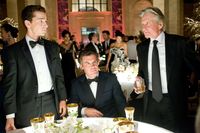
Twenty-three years after Gordon Gekko told us greed was good, Oliver Stone revives everyone’s favorite slick huckster for “Wall Street: Money Never Sleeps.” On one level, the decision’s a no-brainer: the highfalutin white-collar crime that spurred the Great Recession practically makes one nostalgic for the era of insider trading and backroom wheeling and dealing that Gekko represents.
Continue reading “Greed Is Good for Nothing” »