Tribeca Festival
MOVIE REVIEW
Humpty Dumpty X (2026)
Tony Kaye’s Wikipedia page records that during post-production of his anti-Nazi drama, “American History X,” in 1998, the director, stewing on various slights, disowned the studio’s cut of the film and unsuccessfully attempted to have his name removed from the credits. The debate escalated quickly. Mr. Kaye’s previous work in TV commercials included a famous 1993 ad for Dunlop tires set to “Venus in Furs” by the Velvet Underground, which shoved the fetishistic high camp of the era’s music videos forcibly into the commercial space and suggested that the man behind it might arrive at production meetings by swinging through the window on a flaming rope. In fact Mr. Kaye really did arrive at one Hollywood confrontation in the company of a rabbi and a priest, with predictably contentious results. “Humpty Dumpty X” shows some period home-video footage of Mr. Kaye retelling this story at the time to director and fellow Brit-in-L.A. Mike Figgis. “There’s no history of performance art in this town,” replies Mr. Figgis, diplomatically shaking his head only a little. “Never air a grudge.”
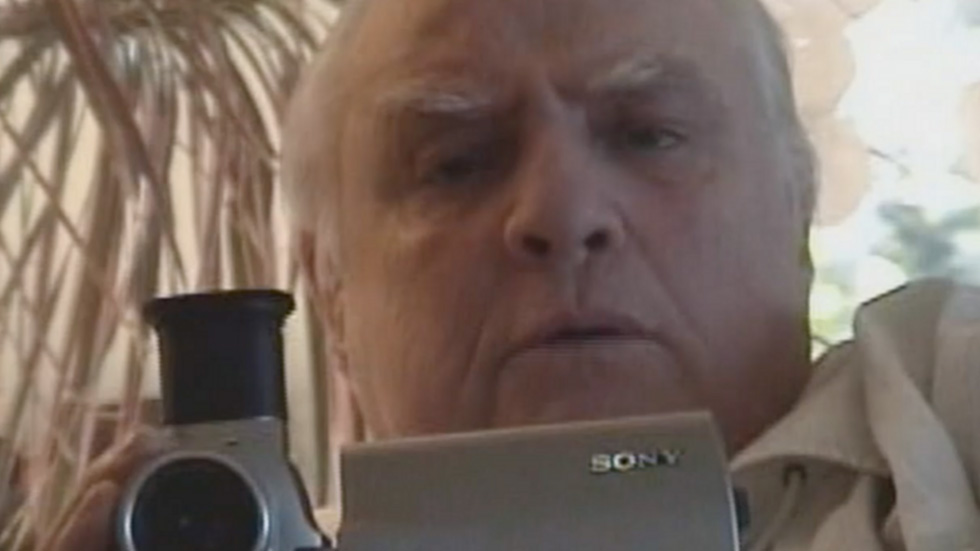
“Humpty Dumpty X” is Mr. Kaye trying to air an old one and apologise for it anew at the same time. It’s largely made up of candid video-cam footage from Mr. Kaye’s archives, since it seems he took every meeting and phone call with a camera in his hand. There are no actual clips from “American History X,” no laying out of its origins or destiny, certainly nothing from actor Edward Norton, deeply involved in the controversies at the time. In no real sense is this a making-of about that movie. Instead it’s a testimony from Mr. Kaye, who indicates throughout that he knows his own worst enemy when he sees him. Bald at the time and verbose then and now, Mr. Kaye strikes a confrontational image, while everything he says sounds measured and polite, even pleading. The video footage combines the coarse grainy abrasion of period video with drastic close ups of Mr. Kaye eating or speaking into a camera roughly one inch away, not unlike the style of his fiction films.
The footage from 1998 includes Mr. Kaye wrangling an opportunity to ask his idol Marlon Brando for advice. The pair sit opposite one another, each man holding a home movie camera and filming the other, turning the encounter into a modernist video art installation. Mr. Brando is the calming voice of reason and moderation, of going-along to get-along, having already accumulated several of the bruises now bothering his colleague. When Mr. Kaye says he wants his director credit on the film to be changed to the name Humpty Dumpty, Mr. Brando chortles like a man recognizing the urge for self-destruction. “You have surrendered to something less than fully mature,” he observes.
In the end the name Tony Kaye stayed on “American History X.” Mr. Kaye moved on, which is to say he took a lucrative marketing gig for the Swiss bank UBS putting visuals to the words of Ralph Waldo Emerson, before blowing up with rage over the exact nature of one graphic element in the film glimpsed for a second right at the end. “I was at war with the philistines, when I had the bravery,” he says now. Some further feature films followed too, although in this documentary a long textual conclusion finds Mr. Kaye now more deeply enraptured by his work as an acting teacher, a musician, a visual artist, than anything he did in Hollywood. He does sing some of the documentary’s narration, which might be an echo of the behavior that once got a rabbi and a priest involved; but he is also effusive in his gratitude to specific individuals who talked him out of the whole Humpty Dumpty boondoggle. Mostly he looks like a man driven to try and work his way closer and closer to some ineffable seat of artistic creativity, hunting after some pure spark of storytelling, an eternal journey to the center of things.
Comments